Cascais
Lisbon's seaside suburb: international schools, a train to the city, and the highest prices on this list.
Updated 14 September 2026
The short version
- Lisbon's seaside town, 30 km west of the capital, with a train into the city in 40 minutes and the airport about 30 minutes by car outside the rush.
- Suits families who want international schools, professionals who commute, and anyone who wants the sea with a city's services. Does not suit a tight budget: it is the most expensive place on this site.
- Asking prices around €6.000 per square metre; a two-bedroom flat rents for about €2.000 a month, a house for about €3.500.
- Cascais council: IMI 0,35%, tourist tax €2 a night, no limits on new short-let registrations.
- The one thing everybody says: it is easy. English everywhere, everything works, and you pay for that in every price.
The town
What it is like to live there
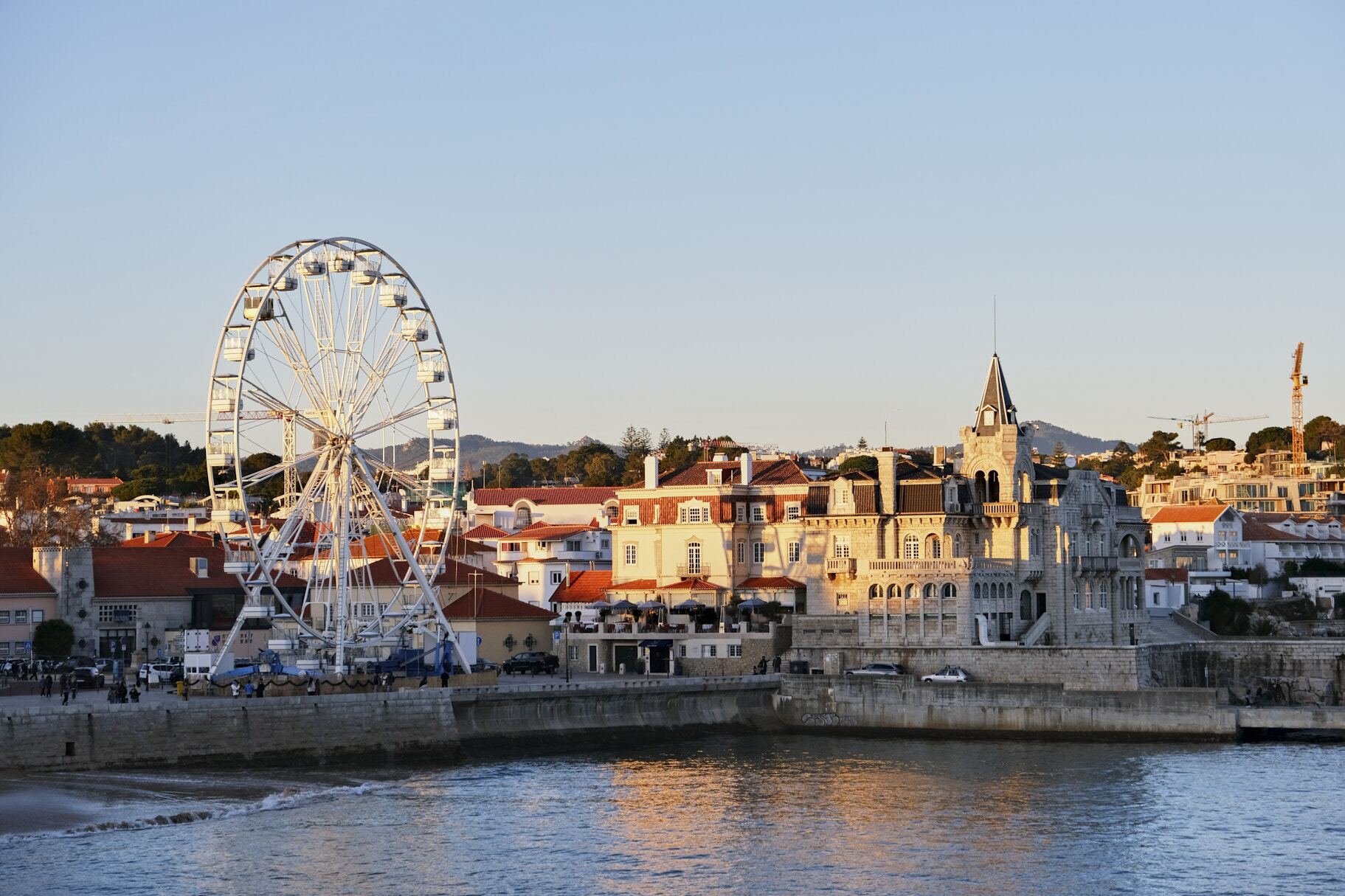
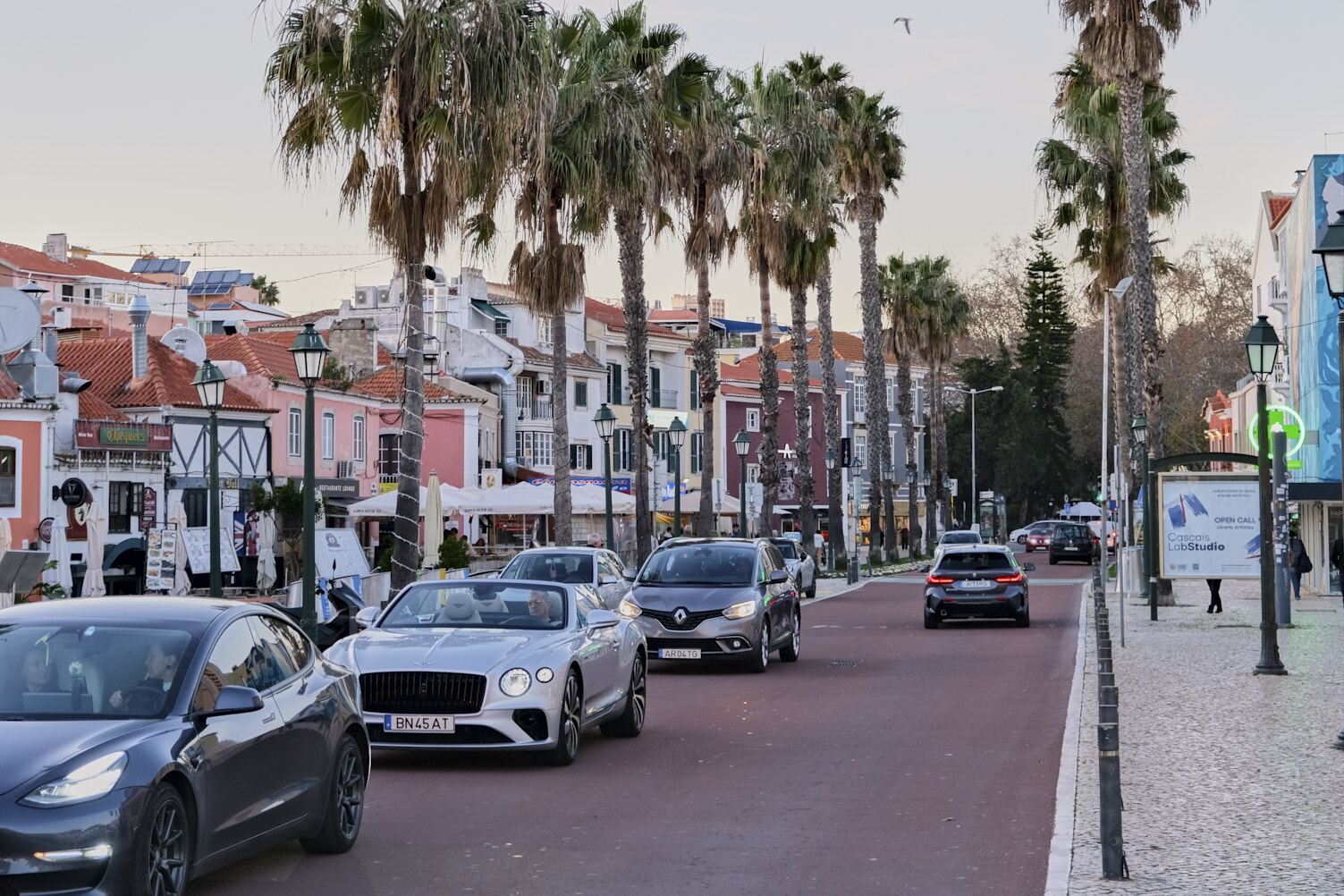
Cascais grew from a fishing village into the resort of Lisbon's court and then of everyone else, and it has the polish that history leaves: a marina, a promenade to Estoril, a citadel, gardens, and streets of cafés and boutiques that stay open all year. The municipality holds about 222.000 people, of whom some 56.000 are foreign residents, a quarter of the town and the fourth-largest foreign population of any council in Portugal. That number explains more about daily life here than any other.
The year is even. Summer brings the beaches to capacity and the traffic to a crawl, but the town does not empty in winter the way the surf towns do, because most people here live here. The foreign community is large, long established and mixed: retirees, families on corporate postings, remote workers, and Portuguese returning from abroad. English is the second language of the town, which makes arrival easy and makes learning Portuguese a matter of will rather than need.
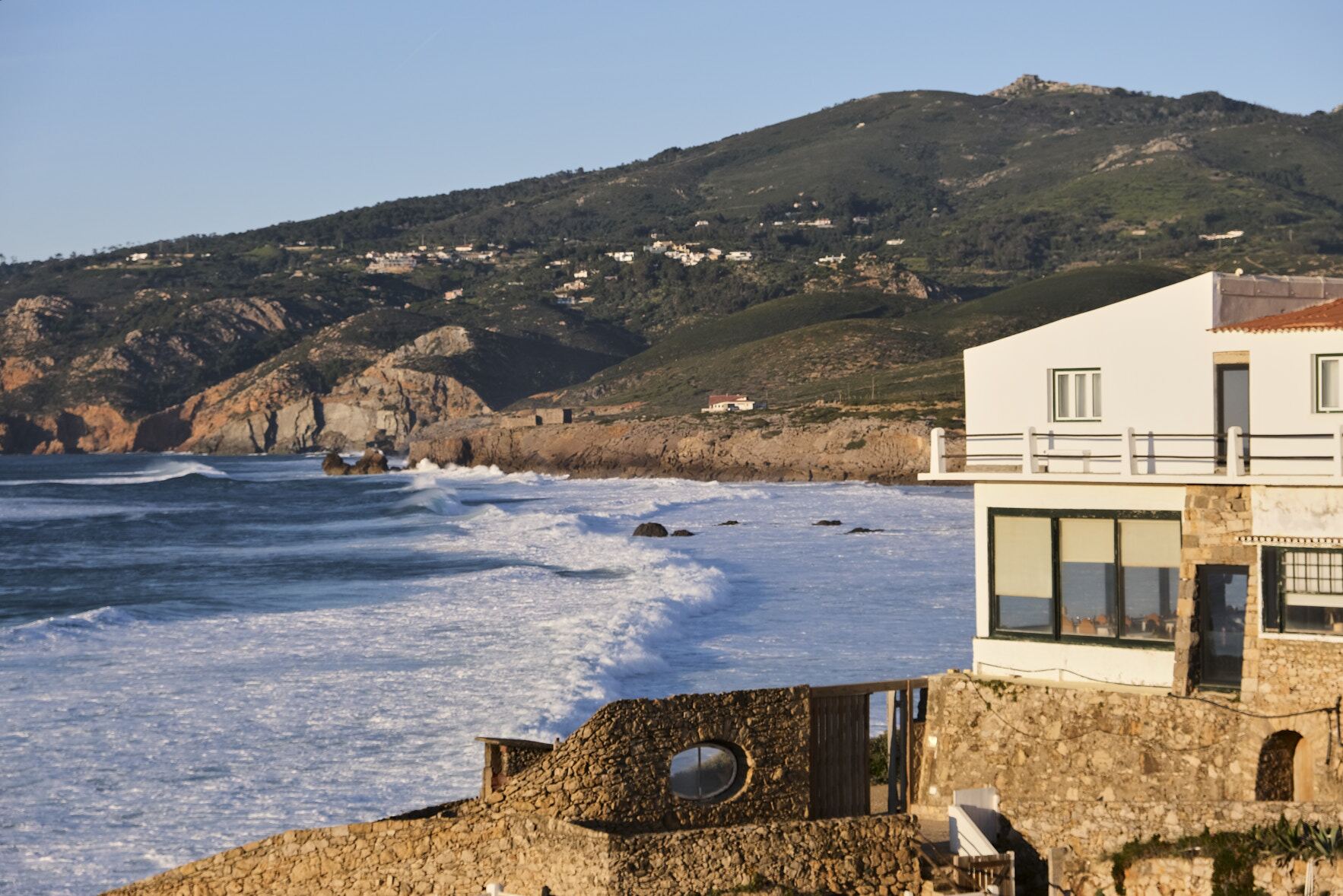
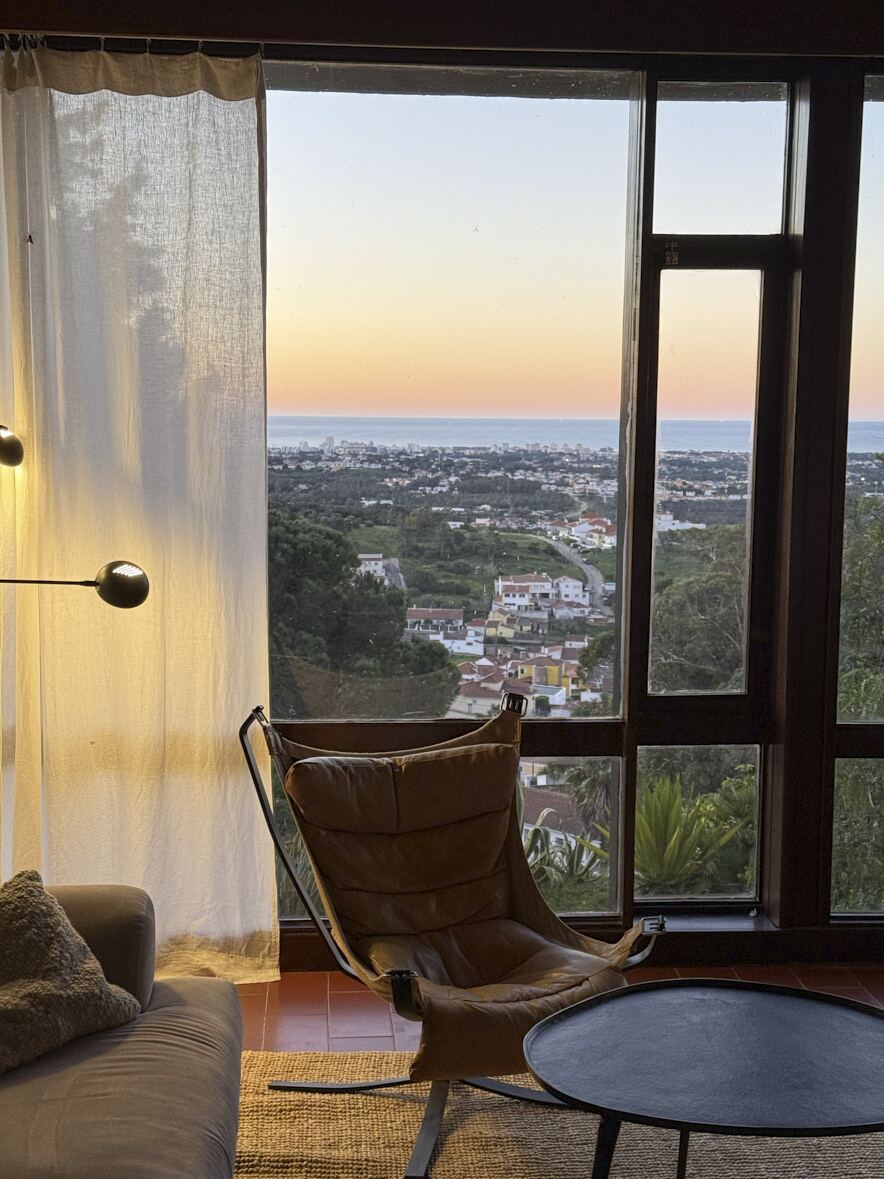
The climate is milder than the coast to the north and much cooler than Lisbon: the capital's August afternoons reach 29 degrees while Cabo da Roca, twenty minutes away, averages 22. Winters are 14 or 15 degrees and wet from October to March. The catch is the nortada, the north-westerly that builds most summer afternoons and blows 20 to 40 knots at Guincho, with sea fog and gusts over 60 kilometres an hour on about thirty-four days a year. Houses are damp and underheated, which nobody mentions on a July viewing.
Tips and tidbits
The short list of what you learn in the first month.
- The train is the whole argument. Cais do Sodré in 33 to 40 minutes, every 15 at peak, last one back around one in the morning. Live within walking distance of a station and you can skip a car; live inland at Birre or Malveira and you cannot.
- The airport is 30 minutes on the A5 free-flow and an hour at six in the evening. Leave the margin.
- West-facing terraces are unusable most summer afternoons. The wind gets up after lunch and does not drop until seven, which is why the good sunset bars are built of stone.
- Winter interiors are cold and damp. Ask about double glazing, heat pumps and which way the living room faces, and view in February if you can.
- The international school fees run to the price of a small flat, and several charge a capital levy of €5.000 or more on top of the first year. Work out the total before you choose a neighbourhood, not after.
- Register at the health centre early anyway. The odds of getting a family doctor here are better than in most of the country, but the queue moves in months, and the private walk-in in town is what most foreign residents use in the meantime.
- The farmers' market at Mercado da Vila is Wednesday, Saturday and Sunday mornings, and it is better and cheaper than the supermarkets around it.
- Parking in the old town is scarce and paid. Use the underground car parks or the free spaces beyond the station and walk in.
- Carcavelos on a summer Saturday is Lisbon's beach, not yours. The town's own coves fill by eleven; Guincho and Abano stay empty because the wind keeps people off them.
- It is expensive in a way that compounds: the rent, the school, the restaurant, the padel court. Budget from the school fee downwards rather than the other way round.
Getting there and getting around
The train from Cascais to Cais do Sodré runs every 15 minutes at peak and every 30 late in the evening, takes 33 to 40 minutes along the water the whole way, and runs from half past five in the morning until about one at night. It is the reason people commute from here. The airport is 33 kilometres and about half an hour on the A5 outside the rush, three quarters to an hour in it, or 75 to 85 minutes by train and metro.
On the rail corridor, from Carcavelos through Parede and Estoril to Cascais itself, you can live without a car: the towns are walkable and the seafront path joins them. Inland at Birre, Quinta da Marinha, Malveira da Serra or Murches, where the villas and the international schools are, a car is not optional and often two are needed. Parking in the centre is scarce and paid.
Honest downsides
Price, first and always. The national statistics office put the median sale price here at €5.000 per square metre in the first quarter of 2026, against a national median of €2.337, which makes Cascais the second dearest municipality in Portugal after Lisbon. New leases run at €16,50 per square metre a month, three quarters above the national figure. Family housing is the sharpest end of it: Cascais has the highest median price in the country for homes of four bedrooms or more. Then the wind, which makes a west-facing terrace unusable most summer afternoons, and the damp, cold interiors that follow it in winter. Traffic is a real cost of living inland, with the Lisbon region averaging twenty-four minutes to cover ten kilometres and ninety-five hours lost a year in the rush. Short lets are concentrated rather than general: four fifths of the municipality's registrations sit in the Cascais and Estoril parish alone, some fifteen thousand beds, which is why the old town feels the way it does in August. And it can feel like an international enclave rather than Portugal, which is exactly what some people want and what others came to escape.
Living in Cascais
Residence and paperwork
There are two routes in. An EU citizen needs no visa: you arrive, and after three months you register as a resident at the council in Cascais with a passport and proof of an address. Everyone else applies at a Portuguese consulate before travelling, most often for the D7, for people living on a pension or other income that arrives whether they work or not, or the D8, the digital-nomad visa, for remote workers who can show earnings of about four times the Portuguese minimum wage. Either becomes a residence permit once you are here, issued by AIMA, whose appointments are the slow part of the whole business and the reason people start a year ahead.
The order that saves the most time: the tax number, the NIF, first, because a bank account, a lease, a phone contract and the electricity all ask for it; then a Portuguese bank account; then the rental contract, which is what proves the address; then the residence registration, and only then the health centre. A lawyer to run the appointments costs a few hundred euros and is worth it for a first move from outside the EU.
- Portuguese visas: the foreign ministry's portal, where the D7 and D8 conditions and the consulate appointments live.
- AIMA: the agency that issues and renews the residence permit once you are in the country.
Housing
Two markets, and which one you are in decides how you live. The rail corridor, from Carcavelos through Parede, São Pedro, São João, Estoril and Monte Estoril to Cascais itself, is apartment country priced by the distance to the station and the sea. The inland northern belt, Birre, Quinta da Marinha, Areia, Alvide, Malveira da Serra, Murches and Manique, is villas and gated condominiums, car-dependent, and where the international schools sit. Asking prices average around €6.000 per square metre and go well beyond that on the front.
Rents follow: about €2.000 a month for a two-bedroom flat, €3.500 for a house, €6.000 and up for a villa with a pool. Supply is better than in the small towns and competition is fiercer; agencies expect proof of income and two months' deposit, and furnished lets are common because of the corporate postings. Take a short let first if you can, because the corridor and the inland belt are genuinely different lives and a month here will tell you which one you want.
Where you look changes the price by two thirds. The four parishes are a clear ladder, and the two at the bottom are the two rising fastest, which is what happens when a market prices people out of the top of it.
| Asking prices by parish | € per m² | Over a year |
|---|---|---|
| Cascais e Estoril | €7.020 | +0,9% |
| Carcavelos e Parede | €5.403 | +3,2% |
| Alcabideche | €4.923 | +10,6% |
| São Domingos de Rana | €4.123 | +12,2% |
Idealista's asking prices for August 2026, against a municipal average of €6.055. Asking prices sit above what homes actually change hands for: the statistics office put the median sale at €5.000 per square metre in the first quarter of 2026.
- Cascais Vila, Estoril and Monte Estoril: walkable, lively, the highest prices, and three in every ten homes empty or a second home, which is why the centre feels thinner in February than its population suggests.
- Carcavelos and Parede: closer to Lisbon, a long beach, the biggest school, and the most apartment-heavy part of the municipality, with half the buildings three storeys or more.
- Birre and Quinta da Marinha: houses with gardens and gated estates behind the town, the classic family address, and a car for every errand.
- Alcabideche, Malveira da Serra and Murches: the inland and hill villages, where nearly nine in ten buildings hold one or two homes, and the fastest-rising prices in the municipality.
- São Domingos de Rana, Tires and Abóboda: the dense inland parish with no coast, the cheapest addresses here, and rising as fast as anywhere.
- Idealista: the portal most listings reach first, in English, and the only practical way to compare the corridor against the inland belt.
- Imovirtual: the second portal, worth a look because some agents post to one and not the other.
- Casa Sapo: the older Portuguese portal, thinner at this end of the market but occasionally first with a villa.
Cost of living
For one person renting a two-bedroom flat, a comfortable month runs about €3.000 to €3.500. A family of four in a house with two children at an international school sits nearer €7.000 to €9.000, the fees being the largest line after the rent and often larger than it. Groceries, restaurants and services cost about what they do in Lisbon and a little more on the seafront. The rents in the table come from the market data and move with it; the rest is what the town charged when the guide was last updated.
| What things cost | |
|---|---|
| Rent, a two-bedroom flat, unfurnished | €2.000 a month |
| Rent, a house | €3.500 a month |
| Rent, a villa with a pool | €6.000 a month |
| A coffee at the counter | €1 to €1,80 |
| The lunch plate, with bread and a drink | €12 to €15 |
| Dinner for one, fish and wine | €30 to €60 |
| A beer on a terrace | €3 to €5 |
| Groceries for one, a month | €350 to €450 |
| Electricity, water, gas and internet, a month | about €140 |
| A coworking desk, a month | €120 to €230 |
| An international school, a year | €12.000 to €30.000 |
| The monthly transport pass, all of the Lisbon region | €40 |
Health
Public
The national health service, the SNS, covers anyone resident: you register at the health centre on Rua Padre Moisés da Silva with your tax number and proof of address, get a user number, and are assigned a family doctor when one is free. Contrary to the usual complaint, this area does better than most of Portugal: about an eighth of the health unit's registered patients are without a doctor, against nearer a sixth nationally, though that number has been climbing through 2026. The hospital is Hospital de Cascais at Alcabideche, five minutes inland, with a full twenty-four-hour emergency department, and it is one of the better public hospitals in the country. Once you are in, care costs nothing or a few euros; the catch, as everywhere, is the waiting.
- Centro de Saúde de Cascais: the public health centre on Rua Padre Moisés da Silva, where you register for a family doctor.
- Hospital de Cascais Dr. José de Almeida: the public hospital at Alcabideche, five minutes inland, with a 24-hour emergency department.
Private
Private care is what most foreign residents here actually use, and Cascais has more of it than anywhere on this site outside Lisbon. A specialist consultation runs €70 to €120, the appointment comes within days, and every clinic has English-speaking staff. Insurance is priced by age and plan rather than income, from about €40 a month at thirty to well over €120 at sixty, with a co-payment on each visit, waiting periods and exclusions for anything you already have. The private hospital in town has a walk-in service in the daytime but only twenty-six beds, so anything serious still goes to Alcabideche or into Lisbon.
- Hospital CUF Cascais: the private hospital in town, walk-in care from 8 to 22, English spoken, 26 beds.
Shopping
Markets
The Mercado da Vila in the centre is both a municipal market and a small food hall, and its farmers' market on Wednesday, Saturday and Sunday mornings is where the growers from the Sintra side bring their produce. It is better and cheaper than the supermarkets a street away, and it is one of the few places in central Cascais that still feels like a Portuguese town rather than a resort.
- Mercado da Vila: the municipal market and food hall, with the farmers' market on Wednesday, Saturday and Sunday mornings.
Shops
The old town's streets carry the boutiques, the surf shops and the galleries, and they are open all year rather than seasonally. For everything else there is CascaiShopping on the edge of the municipality, a full mall with the chains, the cinema and the furniture stores, and the retail parks along the A5. Nothing here requires a trip into Lisbon.
Supermarkets
Every chain is here and most have several branches. The Continente at CascaiShopping and the Auchan at the town entrance are the two big weekly shops, both with parking; Pingo Doce at Guia and a Lidl near the centre cover the rest. All open daily, most until nine or later.
- Continente Cascais: the big weekly shop at CascaiShopping, daily 8 to 23.
- Auchan Cascais: the hypermarket at the town entrance, daily 8 to 22, free parking.
- Pingo Doce Guia: the everyday supermarket on the Guincho road, with fresh counters and delivery.
Schools
This is why most foreign families choose Cascais. The densest cluster of international schools in Portugal sits in this municipality and the next one along, offering British, American and IB curricula from nursery to sixth form. Fees run from about €12.000 a year in the early years to €30.000 in the last ones, before registration and the capital levies of €5.000 and upwards that several of them charge. Apply before you sign a lease, and add up the whole bill rather than the headline.
The state schools are free, taught in Portuguese, and better than the foreign community's default assumption: two groupings cover the town from pre-school to secondary, and children under about ten pick the language up within a school year. Between the two there are private Portuguese schools with strong English, which cost a fifth of the international fees and are the option most people never look at.
- King's College School Cascais: British curriculum, fees €12.500 to €27.500 for 2026/27, plus registration.
- IPS Cascais British International School: at Bicesse, British curriculum, €11.000 to €17.800, with a €4.000 registration fee.
- St. Julian's School: at Carcavelos, the largest of them, IB diploma and a bilingual stream, €12.700 to €30.000 plus a €5.000 capital levy.
- St. Dominic's International School: at São Domingos de Rana, nursery to grade 12, €11.800 to €23.200 plus a yearly registration and a capital levy.
- Agrupamento de Escolas de Cascais: the state grouping for the town, primary through secondary, free and in Portuguese.
- Agrupamento de Escolas da Cidadela: the second central state grouping, from pre-school to secondary.
Coworking spaces
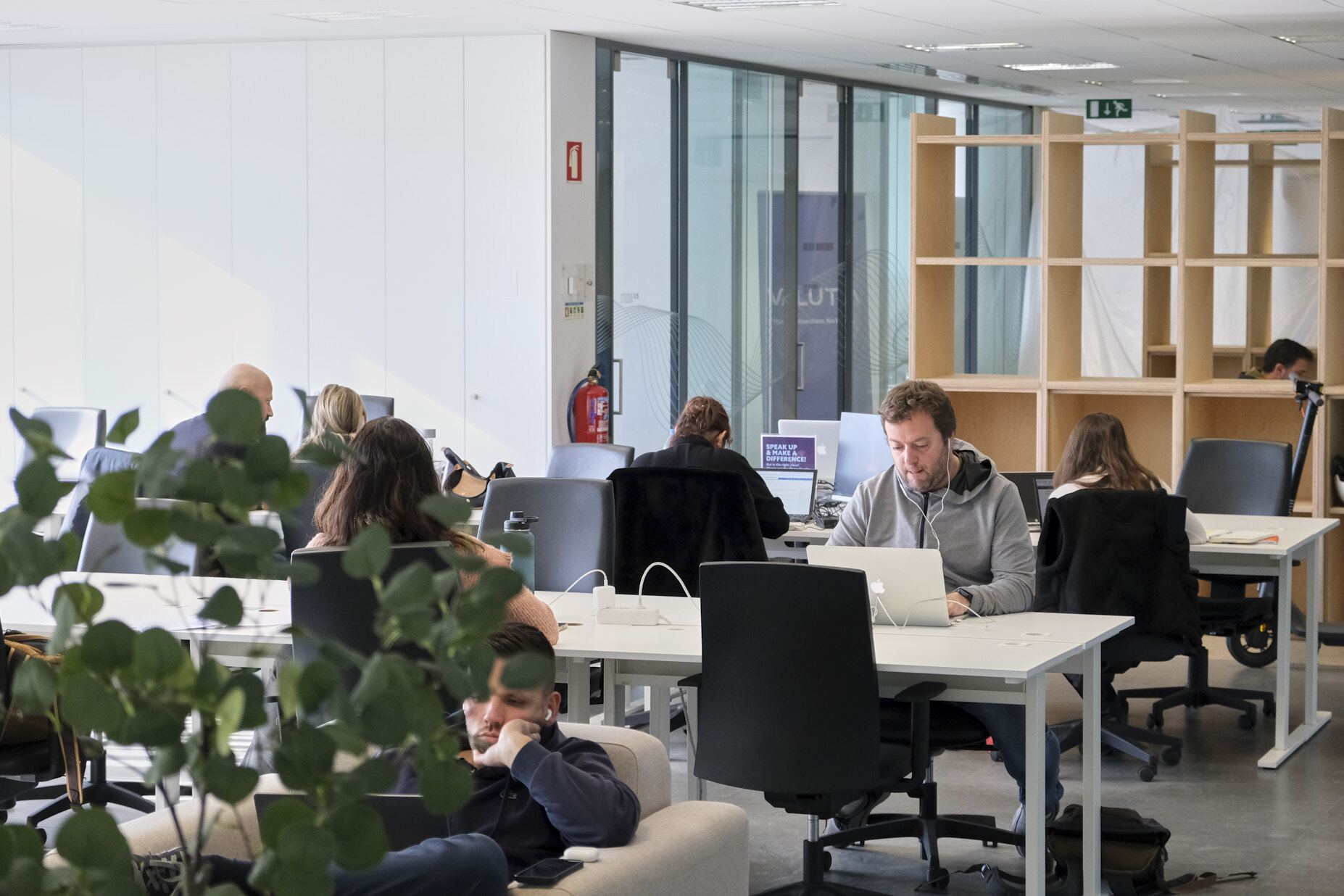
Three proper spaces at three different prices, which between them cover most of what a remote worker wants. A dedicated desk runs €220 to €230 a month, a part-time membership about €120, and the campus out at Malveira da Serra sells by the day for anyone passing. Fibre and 5G are as good as Lisbon's, the cafés expect laptops, and enough people work remotely here that a coworking desk is as much about company as about the wifi.
- Cascais Office: two minutes from the station, a dedicated desk at €220 a month including VAT, open around the clock.
- Cowork Cascais: at Alcabideche, ten minutes inland, part-time at €120 a month or a dedicated desk at €230, plus VAT.
- LACS Cascais: a garden campus at Malveira da Serra with parking and charging, sold by the day or the office.
Community
The community is older and more settled than the surf towns': families and professionals rather than nomads, organised through the schools, the sailing club, the golf courses and long-running foreign associations. Lisbon's start-up and finance world is a train ride away and many people here work in it. With a quarter of the municipality foreign, you can build a whole life in English, which is the convenience and the trap in the same sentence.
The sailing club is the closest thing the town has to a social centre and takes adults as beginners, which is the most reliable way in for someone arriving without children. Beyond it, the day-to-day runs on WhatsApp groups organised by street, school class and sport, and you are added by a person rather than by a link.
- Clube Naval de Cascais: the sailing club and school, dinghies to keelboats, wing foil and diving, adults and children.
- Línguas Estoril: Portuguese for foreigners from A1 to C2 at São João do Estoril, in groups, intensive or private.
- Soulstice Studio: English-language hot yoga, breathwork and ice baths out at Aldeia de Juzo.
Taxes
On the home
Buying costs about seven percent on top of the price: the transfer tax, IMT, on a sliding scale that reaches 7,5% for a main home, stamp duty of 0,8%, and the notary and registry. Since May 2026 a buyer who is not resident in Portugal pays 7,5% on the whole price instead: a resident meets that rate only on the slice above about a million euros, so on a €500.000 home the non-resident pays roughly twice the tax. Then every year the council's property tax, IMI, at Cascais's rate of 0,35% of the tax office's valuation, which usually sits well below the market price. A first home can be exempt from IMI for three years.
On your income
You become tax resident after 183 days in a year, or sooner with a home you keep as your habitual one, and then pay two things on what you earn. Income tax, IRS, on worldwide income at progressive rates from 12,5% to 48%, with a 2,5% solidarity charge above €80.000. And social security: an employee pays 11% of gross and the employer 23,75% on top; a freelancer on recibos verdes pays 21,4% on 70% of what was invoiced, declared quarterly, with the first year exempt, and a remote worker paid by a foreign employer is normally treated as one. Contributions buy the state pension, sick pay and parental leave, not the health service, which comes with residence; EU citizens can stay on their home system for a while on an A1 certificate, and foreign pensions carry no contributions but are taxed at the normal rates. The old non-habitual resident regime closed to newcomers in 2024; its successor, IFICI, gives a flat 20% income tax for ten years to people in listed scientific, technical and start-up roles, applied for in the first year. Before any of it comes the tax number, the NIF, a morning at the tax office or a lawyer's fee from abroad.
What that means for a freelancer invoicing €100.000 a year, taxed on 75% of it under the simplified regime, with and without IFICI. An accountant costs €100 to €200 a month and, at these sums, earns it.
| A freelancer's year | Standard | Under IFICI |
|---|---|---|
| Invoiced | €100.000 | €100.000 |
| Social security, 21,4% of 70% of it | − €15.000 | − €15.000 |
| Income tax on 75% of it, progressive or flat 20% | − €25.000 | − €15.000 |
| Left | about €60.000 | about €70.000 |
A rough calculation on the 2026 tables, before the deductions for children, rent and health, rounded to the thousand. Not tax advice: the rules move with every budget, so check the date at the top of the guide.
- Portal das Finanças: the tax authority's portal, where the NIF, the IMI bills and the yearly return all live; in Portuguese, with an accountant's help worth its fee in the first year.
On a short let
Renting out by the night is business income, declared under category B, with a simplified regime that taxes a fraction of the gross for smaller operators, and the guest's tourist tax of €2 a night for the council, up to 7 nights. The registration, the AL, is open in Cascais without a cap, which is not true of Lisbon or Porto. A long let is taxed at a flat 25% on the rent, less for contracts of five years or more.
Eating and drinking
Breakfast
The best coffee on this coast, because the market is here for it: a roastery in the centre, a specialty bar inside a lighthouse on the sea, and vegetarian kitchens with rooftops. All of them open through the winter, which the seasonal places on the beach do not. The Portuguese version, a galão and a pastry at a counter for under two euros, is on every corner underneath the newer layer.
- Unity Coffee Roasters: the in-house roastery on Avenida 25 de Abril, open to eight in the evening, all year.
- Lusophonica: specialty coffee and a radio studio inside the Santa Marta lighthouse, with a terrace over the sea.
- House of Wonders: a vegetarian café and gallery with a rooftop, daily from nine to eleven, year-round.
Lunch
Cheaper and better than dinner, and the one meal where Cascais still behaves like a Portuguese town. A daily plate runs €12 to €15 a street back from the front; the market's seafood counter lets you pick by weight and eat it at a table beside the stall; and the charcoal chicken house that has been going since 1974 is where families go when nobody wants to cook.
- Marisco na Praça: in the Mercado da Vila: pick your seafood by weight at the counter and eat it there, mains from €13,50.
- Jardim dos Frangos: charcoal chicken since 1974, open daily, the cheap family standby.
- Taberna Clandestina: petiscos and pasta in the old town, daily from noon to eleven, no bookings after half past six.
- Grelhas, Casa da Guia: grilled fish and meat on the cliff at Casa da Guia, mains €14 to €25, closed Tuesdays in winter.
Dinner
Fish, and the town has been cooking it for visitors long enough to be very good at it. The old fishermen's taverns in the centre and the family houses out at Boca do Inferno are the classics, at €40 to €55 a head with wine and the fish sold by weight; the special-occasion room above Guincho runs higher. A street back from the front there is Italian, Japanese, Indian and Brazilian for the nights when you have had enough sea bass, and the marina covers a reliable €30 a head.
- Mar do Inferno: the family fish house at Boca do Inferno, forty-eight years in the same hands, closed Wednesdays.
- O Pescador: the old fishermen's tavern in the centre since 1964, live shellfish and a serious wine list, closed Wednesdays.
- Furnas do Guincho: the special-occasion seafood room on the cliff over Guincho, open daily until midnight.
- Marisco na Praça, Marina: reliable seafood at the marina, about €30 a head by the restaurant's own reckoning, daily to midnight.
Sundowners
The coast faces west here, which is the whole point, but the same westerly that makes the sunset makes the terrace cold, so the good places are built of stone and glass rather than canvas. The bar in the dunes above Guincho is the one everybody names, open all year and taking no bookings. In town the rooftops over the bay are gentler and busier.
- Bar do Guincho: the wood-and-stone terrace over the dunes at Guincho, open all year, no bookings taken.
- Blue Bar, Hotel Baía: the rooftop over the bay in the old town, with sunset parties through the summer.
Nightlife
Livelier than the surf towns and calmer than Lisbon: bars in the old town until two, a clifftop cluster of restaurants and bars at Casa da Guia with live music, and the Estoril casino, which is open until three and puts on free music most nights of the week. It is a town of long dinners rather than of clubs, and the people who want clubs take the train in and a taxi back. The last train from Lisbon leaves around one, and a taxi after that is €40.
- Casa da Guia: the clifftop cluster of bars and restaurants on the Guincho road, open to two, with live music.
- Casino Estoril: open daily from three in the afternoon to three in the morning, with free live music most evenings.
Activities
Beaches
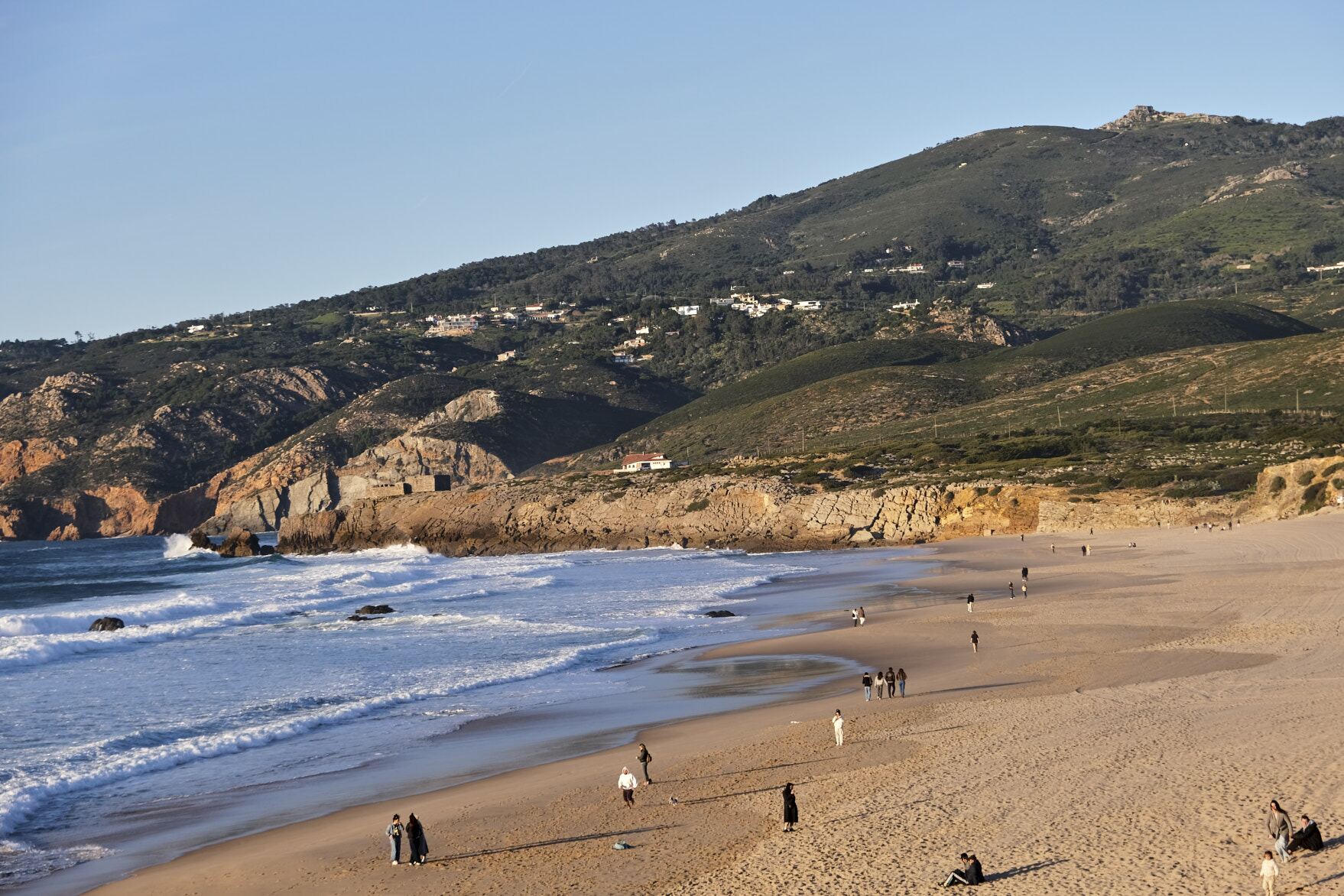
Sixteen beaches in about twenty kilometres, and the coast turns a corner in the middle of them, which changes everything. West of the town the shore faces the open Atlantic and the wind: huge, wild and cold. East of it the coast swings to face south, the wind drops, and the beaches become the sheltered coves and promenade beaches that families use. Knowing which side of the corner you are on is the whole of choosing a beach here. West to east:
- Abano: the wildest, rocky and usually empty, at the north end of the natural park.
- Guincho: a kilometre of exposed sand under the dunes, world-class for wind and surf, dangerous for children, and beautiful on the days you cannot swim.
- Cresmina: the same dune system a little more sheltered, and where the surf schools set up.
- Santa Marta and Ribeira dos Pescadores: the town's own coves by the marina and the fishing boats, small and central.
- Rainha: a tiny cliff-backed cove below the old town that fills by eleven in summer.
- Conceição and Duquesa: calm, blue-flagged and shallow, the family beaches, and the start of the promenade to Estoril.
- Tamariz: the classic Estoril beach below the casino, with the train stopping at the sand, crowded all summer.
- Poça, Azarujinha and São Pedro: sheltered pockets at São João and São Pedro, with a local surf crowd on the last of them.
- Avencas: a protected marine area with rock pools, better for looking than swimming.
- Carcavelos: 1,2 kilometres of sand, the surf schools, the summer parties and half of Lisbon on a Saturday, with its own station.
Surf, wind and kite
Two very different coasts within twenty minutes. Guincho and Cresmina face the open Atlantic and take everything it sends: consistent swell all year, a beach break that closes out when it is big, and from May to September a nortada of 20 to 40 knots that turns the whole bay into one of Europe's serious wind and kite venues. It has hosted world championships for good reason, and it is not a beach to learn on when the wind is up. Mornings are the surfable hours in summer; autumn and winter bring the size with lighter wind.
Round the corner, Carcavelos is the opposite: a long, forgiving beach break sheltered from the north wind, with a dozen surf schools on the sand and a wave that works most of the year. It is where the Lisbon side learns, and where you would put a child. São Pedro do Estoril picks up a cleaner wave on a bigger swell for anyone past the school stage.
- Praia do Guincho: the council's own page for the surf, wind and kite beach inside the natural park, with the flag and safety notices.
Sailing
Cascais bay is one of the best natural sailing arenas in Europe, which is why the world championships keep coming back to it: deep water close in, a reliable afternoon breeze and a shore you can see the racing from. The club runs a school that takes adults as complete beginners and children from about six, in dinghies through to keelboats, and adds wing foil and diving. For anyone arriving without children and wondering how to meet people, this is the answer the town gives most often.
- Clube Naval de Cascais: the sailing club and school in the bay, courses for adults and children, and the town's social centre.
Golf
Several courses within fifteen minutes, and one of them is among the best links in Europe. Oitavos Dunes at Quinta da Marinha runs through the dunes and pine of the natural park with the sea on one side, ranks in the world lists, and takes visitors who book ahead and hold a handicap certificate. The others around Quinta da Marinha and Estoril are older, shorter and easier to get on. As with the sailing, the clubhouse is where a good part of the foreign community actually meets.
- Oitavos Dunes: the links course at Quinta da Marinha, minutes from the town, booking ahead and a handicap certificate normally required.
Walking and cycling
The best cycling infrastructure of any town on this site: sixteen kilometres of seafront path from Carcavelos to Guincho, flat, separated from the traffic, and served by free loan bikes from the council's stations between eight and eight. Families ride it, commuters use it and it is the single most pleasant thing about living on this coast.
Behind the town the Sintra-Cascais natural park starts immediately: cliff paths to Cabo da Roca, the westernmost point of the continent, tracks through the dunes above Guincho, and the wooded serra climbing towards Sintra. It is wilder than the polished town below it suggests, and half an hour on foot takes you somewhere that looks nothing like the marina.
- Ciclovia de Cascais: the 16-kilometre seafront cycle and walking path, with the council's free BiCas loan bikes from 8 to 20.
- Parque Natural de Sintra-Cascais: the protected park behind the town, with the cliff trails, the dunes and Cabo da Roca.
In town
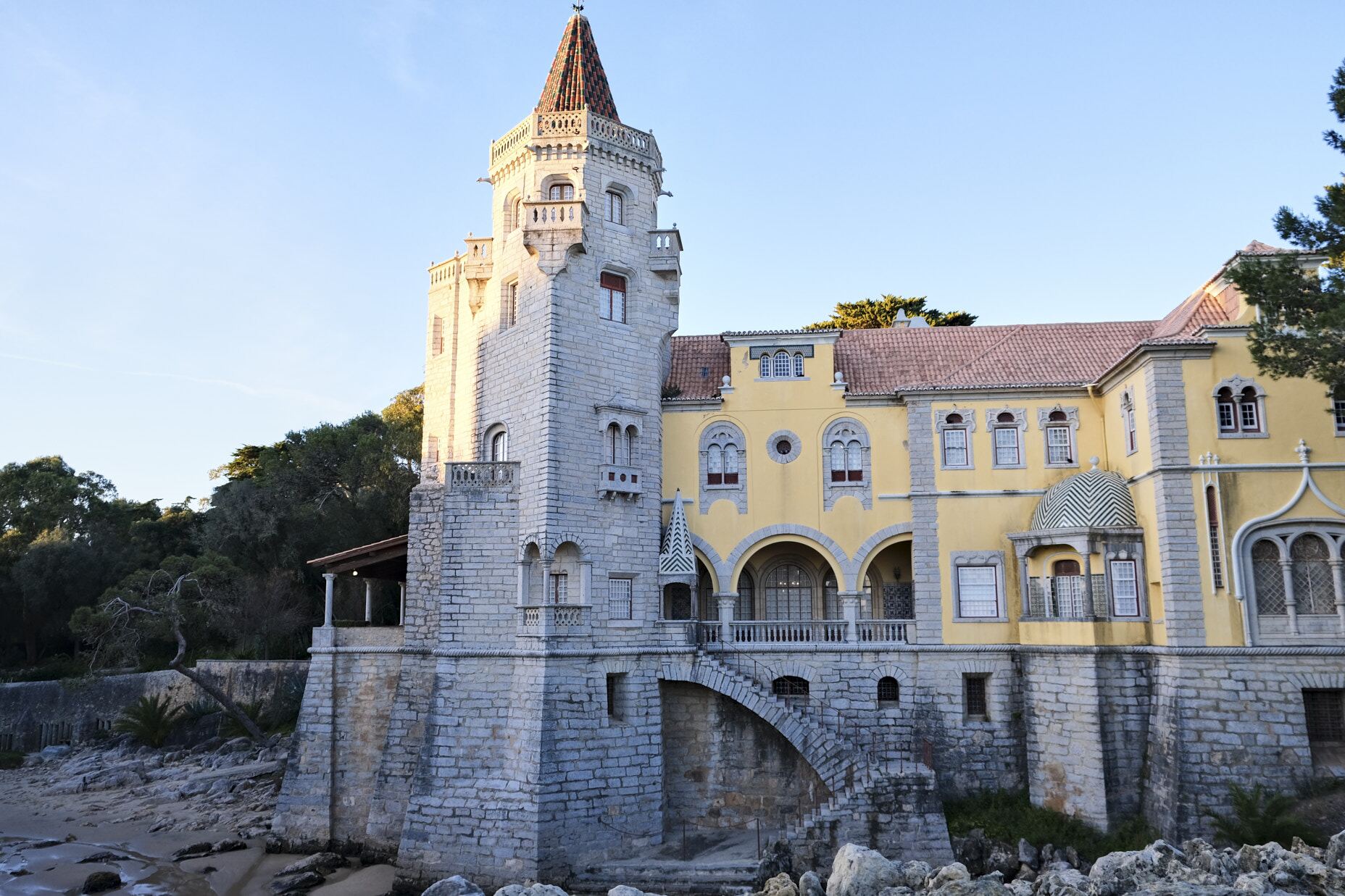
Off the water: the promenade to Estoril, which is four kilometres of sea wall and is how the town takes its evening; the citadel with its galleries and the marina below it; the museums in the old villas, of which the Condes de Castro Guimarães is the one to see; the Wednesday, Saturday and Sunday market; and the fish auction at the harbour early in the morning. The Estoril motor circuit and the summer festivals fill the calendar, and the town puts on more free concerts than anywhere its size in Portugal.
Visiting
36 hours in Cascais
In the manner of the New York Times column: arrive Friday afternoon, leave Sunday, and use the weekend to test the town before you decide. Every stop is chosen to answer a question a future resident has, not a visitor.
Come outside August if you can, and if you are thinking about a house, come in February instead. The wind, the damp and the winter light are what people misjudge here, and a June weekend will not show you any of them.
Friday
- 5 pm The promenade to Estoril. Walk from the fishing harbour east along the sea wall to Tamariz, forty minutes each way past four beaches, and turn back through the old town. It is how the town takes its evening, and it is the clearest hour to judge whether the scale and the polish suit you.
- 8 pm O Pescador. The fishermen's tavern in the centre since 1964: live shellfish, a wine list far better than it needs to be, and about €45 a head. Book, and note the price, because this is what dinner costs here.
- 10.30 pm Casa da Guia. Ten minutes out on the Guincho road, a clifftop courtyard of bars with live music and the sea below. Open until two, which in Cascais is late.
Saturday
- 9 am Mercado da Vila. The farmers' market runs Wednesday, Saturday and Sunday mornings, and it is the one place in central Cascais that still feels like a Portuguese town. Coffee at the counter, then buy your lunch.
- 10.30 am Guincho and the dunes. Twenty minutes out to the wild side: a kilometre of sand under the dunes with the wind already building and the kites going up. Walk the boardwalk through the dune reserve at Cresmina. This beach is the reason half the people here moved, and the reason the other half never go.
- 1 pm Grelhas, Casa da Guia. Grilled fish on the cliff on the way back, mains €14 to €25, which is a Cascais lunch at a fair price.
- 3 pm The inland belt. Drive Birre, Quinta da Marinha, Alvide and Malveira da Serra, past the international schools and the golf. This is the other Cascais: houses with gardens, gates, and a car for every errand. Time the run from there to the nearest station and decide whether you would do it twice a day.
- 6.30 pm Bar do Guincho. Back to the dunes for the sunset from the stone terrace, which is open all year and takes no bookings. Notice how cold the wind is by seven, in whatever month you are reading this.
Sunday
- 9.30 am Unity Coffee Roasters. Breakfast at the roastery on Avenida 25 de Abril, among the people who live here rather than the people visiting.
- 11 am The train to Lisbon and back. Walk to the station and take the train to Cais do Sodré, thirty-five minutes along the water, and come straight back. This is the single fact that decides Cascais for most people, and an hour and a half will settle it better than any timetable.
- 1.30 pm Marisco na Praça. Back at the market, pick your seafood by weight at the counter and eat it beside the stall. Then the A5 to the airport, half an hour free-flow and an hour if you have left it late.
Explore the surroundings
Cascais sits at the end of a peninsula with a capital on one side and a protected coast on the other, and almost everything is inside an hour. The first two are places you would go most weeks.
- Sintra: twenty-five minutes inland, the palaces in the wooded serra, and the greenest air within reach of the coast.
- Lisbon: thirty-five minutes by train to Cais do Sodré, for the museums, the concerts, the work and the airport.
- Cabo da Roca and the park: twenty minutes north, the westernmost point of the continent and the cliff trails either side of it.
- Ericeira: fifty minutes north, the surf reserve, for a smaller town and a colder, wilder sea.
- Arrábida and Setúbal: an hour south across the bridge, limestone cliffs and the warmest, calmest water near Lisbon.
- Óbidos: an hour and a quarter north, the walled town and the lagoon, for a day that costs a third of what this coast does.
Hotel recommendations
Cascais has more hotels than anywhere on this site, so the question is only where you want to be. In the old town you can walk to the station and to most viewings; out on the front you get parking, which matters if the houses on your list are inland.
- Hotel Baía: on the bay in the old town, 113 rooms, a rooftop bar, and a walk to the station and every central viewing.
- Hotel Cascais Miragem: five-star on the seafront a little east of the centre, with easy parking for driving to viewings.
Sources
Sold pricesexactmunicipalINE, Estatísticas de preços da habitação ao nível local, indicator 0012234: the median deed price per square metre of every home sold in the trailing twelve months, by municipality and parish, refreshed from INE's API each quarter. Deed prices, not asking prices.
IMI, tourist tax and containmentexactmunicipalIMI: Cascais council raised urban property to 0,35% for 2026, from 0,33%. Tourist tax €2 per person per night, up to 7 nights. No binding containment as of July 2026.
Figures calibrated 2026-08.