Ericeira
A surf town on the Atlantic cliffs, 45 minutes from Lisbon airport, with a year-round remote-working crowd.
Updated 14 September 2026
The short version
- A surf town of about ten thousand people on the Atlantic, 50 km north-west of Lisbon and about 45 minutes from the airport.
- Suits surfers, remote workers and families who want the sea without the Algarve's distance from a capital. Does not suit anyone who needs warm swimming water or a lively winter nightlife.
- Asking prices around €4.200 per square metre; a two-bedroom flat rents for about €1.300 a month, a house for about €2.000.
- Mafra council: IMI 0,43%, tourist tax €1 a night, no limits on new short-let registrations.
- The one thing everybody says: the wind. Afternoons from May to September blow hard from the north, and the sea is cold all year.
The town
What it is like to live there
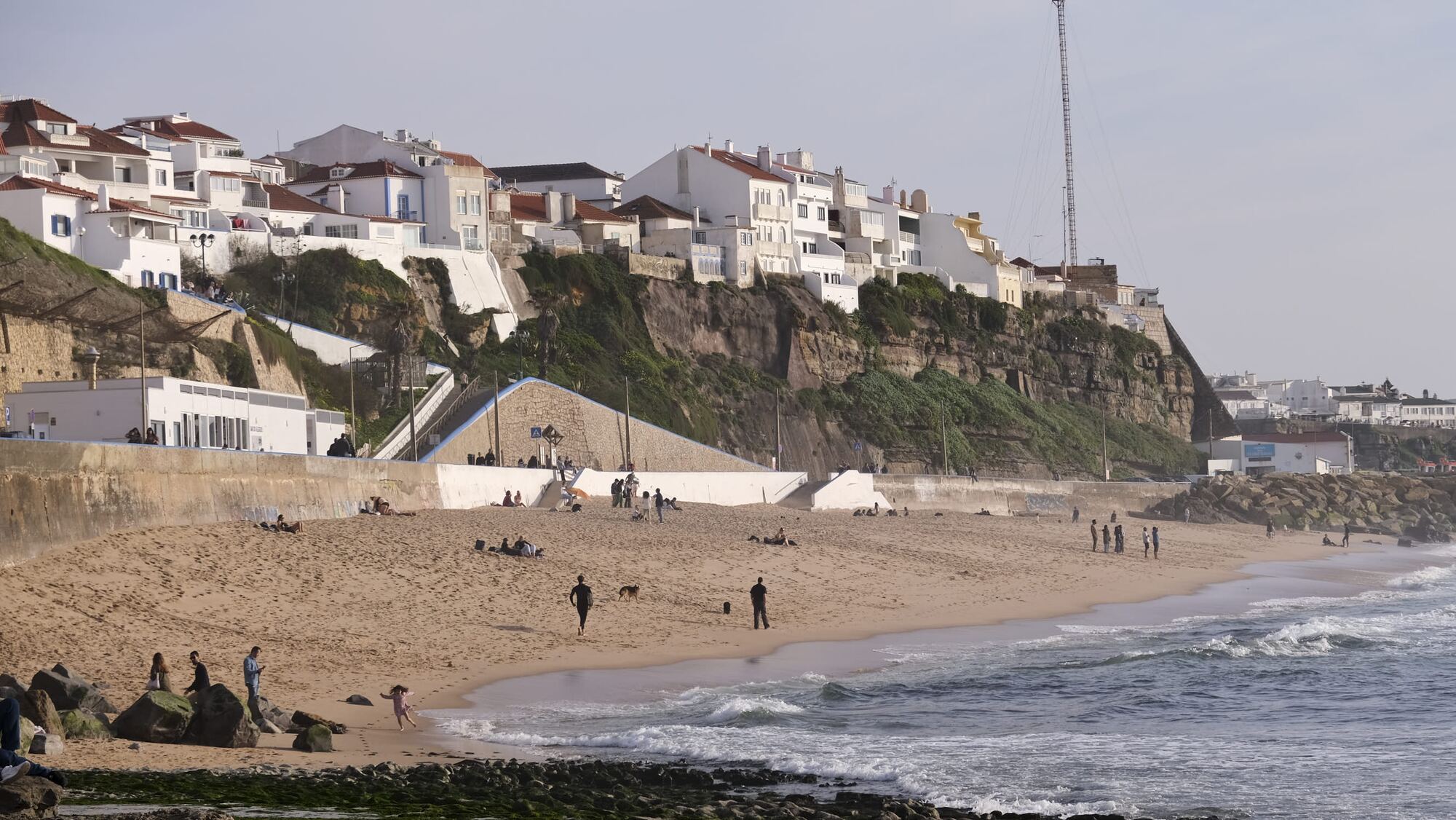
Ericeira is a fishing village that became Europe's first World Surfing Reserve in 2011 and has grown around that identity ever since. The old centre is a few streets of white houses with blue trim above a small harbour, and the town spreads along cliffs with a beach in every cove. It is compact enough to walk, and most of what you need is within fifteen minutes on foot.
The year has two faces. From June to September the town fills with Lisbon families, surf camps and visitors, the terraces are full and parking is hard. From October the crowds go, half the seasonal restaurants close, and what remains is a resident community of locals, surfers and remote workers that keeps the cafés busy through the winter. It is quieter than the summer suggests but never empty.
The weather is Atlantic, not Mediterranean. Summer highs sit in the mid-twenties, winter days around 14 or 15 degrees, and the sea stays between 15 and 19 degrees all year. The north wind, the nortada, blows most summer afternoons; mornings are calm. English is spoken in every café and by most tradespeople, and the town has had foreigners for long enough that nobody remarks on them. Learning Portuguese still changes how the older residents treat you.
Tips and tidbits
The short list of what you learn in the first month.
- Mornings are the beach hours. From May to September the north wind gets up after lunch and empties the sand; when it blows, Praia dos Pescadores under the old town is the sheltered one.
- The sea is 15 to 19 degrees all year. Residents surf in a wetsuit in August and swim rarely.
- In August, park in the lots on the edge of town and walk. The centre's parking is a daily fight from July to September.
- Lunch is the cheap meal: the daily plate with bread and a drink for €10 to €14. Dinner in the same street costs three times that.
- Some tascas are cash only, and tipping is rounding up or five to ten percent, appreciated and never expected.
- Most restaurants close one weekday, usually Monday or Wednesday, and Sunday evenings out of season are quiet. Look before you drive out to a village.
- Book Friday and Saturday dinners from June to September. The rest of the year, walk in.
- English works everywhere. Portuguese changes how the older residents treat you, and the language classes in town are cheap.
- The public health centre is in town but the public hospital is Santa Maria in Lisbon, an hour away; the private clinic by the bus terminal handles the small things.
- The Facebook group is where flats, boards and lifts to the airport change hands. Join it before you arrive. The town itself runs on private WhatsApp groups, and the way in is a person, not a link.
Getting there and getting around
Lisbon airport is about 45 minutes by car outside the rush hours, along the A21 and A8, and an hour or more at peak times. There is no train. Buses run to Lisbon's Campo Grande several times a day and take a little over an hour, and to Mafra, the municipal seat, more often.
In the town itself you can live without a car. For anything beyond it, the supermarkets on the edge of town, the beaches to the north, the hospital, Sintra or Lisbon, you will want one. Cycling works along the coast road but the hills inland are steep.
Honest downsides
The wind and the cold water are the two things you cannot change, and between them they are the reason most people who leave give. Winter evenings are quiet to the point of dull for anyone who wants a city, and half the seasonal places shut from October. Prices have risen faster than local wages, which has made short lets a political question here as everywhere on this coast, and a foreign buyer is on the wrong side of that argument whether or not they take part in it. And everything a capital offers is an hour away, which is either the point or the problem.
Living in Ericeira
Residence and paperwork
There are two routes in. An EU citizen needs no visa: you arrive, and after three months you register as a resident at the council in Mafra with a passport and proof of an address. Everyone else applies at a Portuguese consulate before travelling, most often for the D7, for people living on a pension or other income that arrives whether they work or not, or the D8, the digital-nomad visa, for remote workers who can show earnings of about four times the Portuguese minimum wage. Either becomes a residence permit once you are here, issued by AIMA, whose appointments are the slow part of the whole business and the reason people start a year ahead.
The order that saves the most time: the tax number, the NIF, first, because a bank account, a lease, a phone contract and the electricity all ask for it; then a Portuguese bank account; then the rental contract, which is what proves the address; then the residence registration, and only then the health centre. A lawyer to run the appointments costs a few hundred euros and is worth it for a first move from outside the EU.
- Portuguese visas: the foreign ministry's portal, where the D7 and D8 conditions and the consulate appointments live.
- AIMA: the agency that issues and renews the residence permit once you are in the country.
Housing
Stock is mostly flats in the newer blocks around the centre, older village houses, and detached houses with gardens in the villages inland and along the coast. Prices rose sharply after 2020 with the remote-work wave and have settled at around €4.200 per square metre for asking prices, above the Mafra average and below Cascais.
Long-term rentals are scarce in summer, when owners prefer nightly lets, and easier from October. Expect about €1.300 a month for a two-bedroom flat, €2.000 for a house and €3.000 for a villa with a pool, unfurnished or lightly furnished, with a one-year contract and two months' deposit as the norm.
The portals below carry most of what is formally on the market, and the agents with windows in the centre carry the rest. A good share of the long lets never reach either: they go round the WhatsApp groups and the Facebook group first, which is the argument for spending a month in the town before signing anything.
- The centre: walkable, lively, older buildings, the most expensive per square metre and the noisiest in summer.
- Ribamar and Santo Isidoro, north along the coast: quieter, more houses with land, a car needed.
- Carvoeira and Encarnação, inland and south: village life, lower prices, ten to fifteen minutes to the beaches.
- Mafra town: the municipal seat, twenty minutes inland, with the services of a proper town and prices well below the coast.
- Idealista: the portal most listings reach first, in English, with a map filter for the town and the villages around it.
- Imovirtual: the second portal, worth a look because some agents post to one and not the other.
- Casa Sapo: the older Portuguese portal, thinner here but sometimes first with a village house.
Cost of living
For one person renting a two-bedroom flat, a comfortable month runs about €2.000 to €2.400: rent, utilities of around €120, groceries of €300 to €400, eating out a few times a week, a phone and internet, and a car. A family of four in a house with school fees at a private or international school sits nearer €4.000 to €5.000. Without rent and school fees, daily life costs about a third less than in Lisbon's centre. The rents in the table come from the market data and move with it; the rest is what the town charged when the guide was last updated.
| What things cost | |
|---|---|
| Rent, a two-bedroom flat, unfurnished | €1.300 a month |
| Rent, a house | €2.000 a month |
| Rent, a villa with a pool | €3.000 a month |
| A coffee at the counter | €1 to €1,50 |
| The lunch plate, with bread and a drink | €10 to €14 |
| Dinner for one, fish and wine | €25 to €45 |
| A beer on a terrace | €2,50 to €4 |
| Groceries for one, a month | €300 to €400 |
| Electricity, water, gas and internet, a month | about €120 |
| A coworking desk, a month | €175 to €220 |
| A surf lesson | about €40 |
| A yoga drop-in | €10 to €20 |
| A gym, a month | €35 to €50 |
Health
Public
The national health service, the SNS, covers anyone resident: you register at the town's health centre with your tax number and proof of address, get a user number, and are assigned a family doctor when one is free, which in Ericeira can take a year. Once in, a doctor's visit, a referral, a hospital stay and an emergency cost nothing or a few euros, and prescriptions are subsidised. The hospital for Ericeira is Santa Maria in Lisbon, about an hour; for an emergency the number is 112 and the ambulance comes from Mafra. The catch is time: weeks for a routine appointment, months for a non-urgent specialist.
- USF Ouriceira: the public health centre, weekdays to 20:00; about a third of those registered still wait for a family doctor.
- Hospital de Santa Maria: the public hospital for Ericeira, in Lisbon, about an hour; its health service runs the town's centre too.
Private
Private care runs alongside it and most foreign residents use both: the SNS for the serious and the private for the quick. A specialist consultation costs €60 to €100, a blood panel or a scan about the same, and the appointment is within the week. Insurance is priced by age and plan, not income: a basic outpatient plan is €30 to €50 a month at thirty, a full one with hospital cover €60 to €120, and both double or more by sixty, with most insurers closing to new members around 65. It does not make care free; you still pay €15 to €30 a consultation and a share of each exam inside the network, and plans carry waiting periods, yearly ceilings and exclusions for what you already have. Some residence visas require it. Lisbon's private hospitals, CUF, Luz and Lusíadas, are an hour away; the clinic in town handles the everyday. Pharmacies, physiotherapists, dentists and vets are all in the centre, and dentistry is private for everyone.
- Cintramédica: a private clinic by the bus terminal with specialists, blood tests, imaging and physio.
- Piscinas Municipais: the council's pools, with a weights room and classes, for the days the sea says no.
Shopping
Markets
The municipal market in the centre sells the morning's fish downstairs and the local growers' fruit, vegetables and flowers upstairs, and is where the older town shops. There is no farmers' market in Ericeira itself: the organic growers sell from their farms and by box, the traditional street fairs are at Malveira on Thursdays and in Mafra once a month, and the region's organic producers gather on Saturday mornings in Lisbon, at Príncipe Real and Campo Pequeno. Vizinha in Santo Isidoro, in the breakfast list, is the farm shop nearest town.
- Mercado Municipal: the council's fish, produce and flower market, daily from 7, to 15:00 in the week and 20:00 on Fridays and Saturdays.
- Quinta do Arneiro: a certified organic farm at Azueira near Mafra, with a farm shop, a weekly vegetable box delivered to the coast, and a restaurant.
Shops and boutiques
The old town's streets are the shopping: surf shops with boards and wetsuits on every corner, of which the town has more than any other kind of shop, and between them a handful of boutiques for clothes, ceramics and homeware, a bookshop, and the bakeries. For anything else, a furniture store, a car, a big electrical shop, the answer is Mafra, twenty minutes inland, or the retail parks on the road to Lisbon.
Supermarkets
Every chain is here. Continente Bom Dia on the south edge and Pingo Doce on the north are the everyday ones, both with parking; Intermarché sits in town; Lidl is on the Mafra road at Capa Rosa and Aldi on Rua União Ericeirense for the cheaper basket. All open daily to about 21:00. The big hypermarkets are in Mafra and on the way to Lisbon.
Schools
The state schools run from nursery to the end of secondary in Ericeira itself, with Mafra's secondary as the alternative, all taught in Portuguese; children under about ten tend to pick the language up within a school year, older ones find it harder. The private schools in the Mafra area teach in Portuguese with English as a subject; the nearest English-medium school is in Torres Vedras, half an hour north.
The international schools, with English-language curricula and the IB or British exams, are in the Sintra and Cascais areas: 35 to 60 minutes each way by car, no school bus from Ericeira, and fees of roughly €12.000 to €30.000 a year. That daily drive is the main reason families with teenagers choose Cascais over Ericeira, and worth deciding before the house.
- Agrupamento de Escolas da Ericeira: the state schools in town, from nursery to the end of secondary.
- Escola Secundária José Saramago: the state secondary in Mafra, with science, humanities and vocational tracks.
- Escola Internacional de Torres Vedras: Cambridge curriculum from nursery to grade 12, about 30 minutes north; fees on request.
- TASIS Portugal: American and IB, in Linhó near Sintra, about 35 minutes, €13.000 to €24.000 a year.
- Carlucci American International School: American curriculum, also in Linhó, €12.000 to €23.500 a year plus a building fee.
- St. Julian's School: British and IB, in Carcavelos, about 45 minutes, €12.500 to €30.000 a year plus a capital levy.
Coworking spaces
Three proper coworking spaces and two cafés that welcome laptops, which is a great deal for a town of ten thousand and the clearest sign of who has moved here. A desk runs from about €75 a month at the council's incubator to €220 in the centre, most sell days as well as months, and all of them will let you work a day before you commit. Fibre reaches the town and the villages around it at the national providers' standard speeds and prices, 5G is good along the coast, and power cuts are rare.
- Kelp Coworking: in the old town, open around the clock, a hot desk about €175 to €220 a month.
- Coastal Cowork Collective: meeting rooms and weekly community lunches, about €196 a month or €17 a day.
- Mother: a café with desks by the day and a kids' corner, closed Sundays.
- Ericeira Business Factory: the council's incubator, about €75 a month, but you apply and it wants a business.
- Hurley Surf Club: the surf shop in the centre with a bakery café where laptops are welcome, wifi and sockets, bakery daily 9 to 17, closed Tuesdays.
Community
Ericeira has a real remote-working scene rather than a passing one: a few coworking spaces in and around the centre, cafés that tolerate laptops in the off season, and a community that organises itself through surf clubs, language exchanges and messaging groups. The mix skews to people in their late twenties to forties who came for the sea and stayed for the pace.
The real community runs on WhatsApp groups: for surf sessions, for lifts, for a flat that is about to come free, for the Sunday run. None of them is public and none is listed anywhere; you are added by someone already in one. The Facebook group below is the front door, a coworking space or a surf school the usual second step, and after a month you will be in three groups and wonder how anyone manages without.
- Ericeira Surf Clube: the town's surf club since 1993, with membership, a school and competitions.
- Ericeira Freelancers & Digital Nomads: the Facebook group of about five thousand where flats, boards and meetups change hands.
- Lingua Language Classes: Portuguese lessons in town, in person or online.
Taxes
On the home
Buying costs about seven percent on top of the price: the transfer tax, IMT, on a sliding scale that reaches 7,5% for a main home, stamp duty of 0,8%, and the notary and registry. Since May 2026 a buyer who is not resident in Portugal pays 7,5% on the whole price instead: a resident meets that rate only on the slice above about a million euros, so on a €500.000 home the non-resident pays roughly twice the tax. Then every year the council's property tax, IMI, at Mafra's rate of 0,43% of the tax office's valuation, which usually sits well below the market price. A first home can be exempt from IMI for three years.
On your income
You become tax resident after 183 days in a year, or sooner with a home you keep as your habitual one, and then pay two things on what you earn. Income tax, IRS, on worldwide income at progressive rates from 12,5% to 48%, with a 2,5% solidarity charge above €80.000. And social security: an employee pays 11% of gross and the employer 23,75% on top; a freelancer on recibos verdes pays 21,4% on 70% of what was invoiced, declared quarterly, with the first year exempt, and a remote worker paid by a foreign employer is normally treated as one. Contributions buy the state pension, sick pay and parental leave, not the health service, which comes with residence; EU citizens can stay on their home system for a while on an A1 certificate, and foreign pensions carry no contributions but are taxed at the normal rates. The old non-habitual resident regime closed to newcomers in 2024; its successor, IFICI, gives a flat 20% income tax for ten years to people in listed scientific, technical and start-up roles, applied for in the first year. Before any of it comes the tax number, the NIF, a morning at the tax office or a lawyer's fee from abroad.
What that means for a freelancer invoicing €100.000 a year, taxed on 75% of it under the simplified regime, with and without IFICI. An accountant costs €100 to €200 a month and, at these sums, earns it.
| A freelancer's year | Standard | Under IFICI |
|---|---|---|
| Invoiced | €100.000 | €100.000 |
| Social security, 21,4% of 70% of it | − €15.000 | − €15.000 |
| Income tax on 75% of it, progressive or flat 20% | − €25.000 | − €15.000 |
| Left | about €60.000 | about €70.000 |
A rough calculation on the 2026 tables, before the deductions for children, rent and health, rounded to the thousand. Not tax advice: the rules move with every budget, so check the date at the top of the guide.
- Portal das Finanças: the tax authority's portal, where the NIF, the IMI bills and the yearly return all live; in Portuguese, with an accountant's help worth its fee in the first year.
On a short let
Renting out by the night is business income, declared under category B, with a simplified regime that taxes a fraction of the gross for smaller operators, and the guest's tourist tax of €1 a night for the council, up to 7 nights. The registration, the AL, is open in Mafra without a cap, which is not true of Lisbon or Porto. A long let is taxed at a flat 25% on the rent, less for contracts of five years or more.
Eating and drinking
Breakfast
This is where the remote-working crowd shows: cafés with proper coffee, brunch and oat milk, a few open from early morning, sourdough and pastry. Most stay open through winter, which the seasonal terraces do not.
Lunch
The cheap meal. The tascas a few streets back from the sea do the daily plate for €10 to €14, and the marisqueiras in the villages north serve the shellfish the town is known for at lunch prices.
- Tasquinha do Joy: the central tasca, a daily plate with bread and a drink, big portions.
- Taberna o Lebre: pregos and a lunchtime queue of locals, cash only.
- GiG, Green is Good: vegetarian-leaning lunches from 10 to 16, closed Wednesdays.
- Ribamariscos: the roadside marisqueira on the coast road at Ribamar, shellfish platters and caldeirada, closed Mondays.
- O Pescador: the family seafood house in Ribamar, seafood rice at village prices, closed Wednesdays.
Dinner
Fish: grilled sea bass, bream and sardines, clams, and the seafood rice that the harbour restaurants have served to Lisbon families for decades, at €25 to €45 a head with wine. The family grills that have done this since the fifties sit alongside a wine bar and a chef's seafood, and most stay open in winter.
- Esplanada Furnas: grilled fish on the cliff edge at Furnas, the plainer, older way with it, open daily.
- Costa Fria: seafood on the seafront with a Greek chef's seasoning, clams in coconut and lime, open daily, about €30 a head.
- Canastra: charcoal-grilled fish on the terrace above the harbour beach since 1998, closed Wednesdays.
- Mar d'Areia: the Egídio family's fish grill since 1959, near Praia do Sul, pick your fish, closed Mondays.
- La Popular: tapas and cured meats in the old town, evenings only, closed Tuesdays.
Sundowners
The hour the town is built for. The coast faces west, the sun goes into the sea at half past five in December and nine in June, and the cliff terraces above the harbour beach and at Furnas fill for it. The cheap version is the kiosk on the cliff; the other is a table booked for the hour before dinner.
- Quiosque Ouriço: the kiosk on the cliff above the harbour beach, beside the club, a beer at kiosk prices with the best view in town.
- Mar das Latas: the wine bar on the cliff over the harbour beach, open from 16:00 with the sunset seats, closed Sundays.
Nightlife
Modest, and shaped by surfers who get up at dawn. Summer evenings are terraces, sunset drinks on the cliffs, live music at a handful of bars and one long-standing club that fills at weekends; the surf camps run their own parties. From October it is a few bars in the centre, quiet by midnight on weekdays and busier on Fridays and Saturdays. For clubs and late nights the answer is Lisbon, an hour away, and a taxi back is expensive.
- Adega Bar 1987: the small bar with live-music nights and petiscos, from 17:00.
- Bar Motel: the natural-wine bar by the market with small plates, the bar residents name first, from 18:00.
- Ouriço: the club since 1960, Thursday to Saturday from 23:00.
Activities
Beaches
A beach in every cove, and the character changes every kilometre. The town beaches are for a swim on a calm day and a walk on the rest; the surf beaches are north and south of them. The water sits between 15 and 19 degrees all year, lifeguards are on the main beaches from June to September, and the north wind empties the sand most summer afternoons, so mornings are the beach hours. South to north:
- São Julião: the southern end, a long open beach break that is quieter than the rest.
- Foz do Lizandro: the river mouth south of town, the family and surf-school beach, with parking and a beach restaurant.
- Praia do Sul: the long town beach below the cliffs, a walk from the centre, with the rooftop cafés above it.
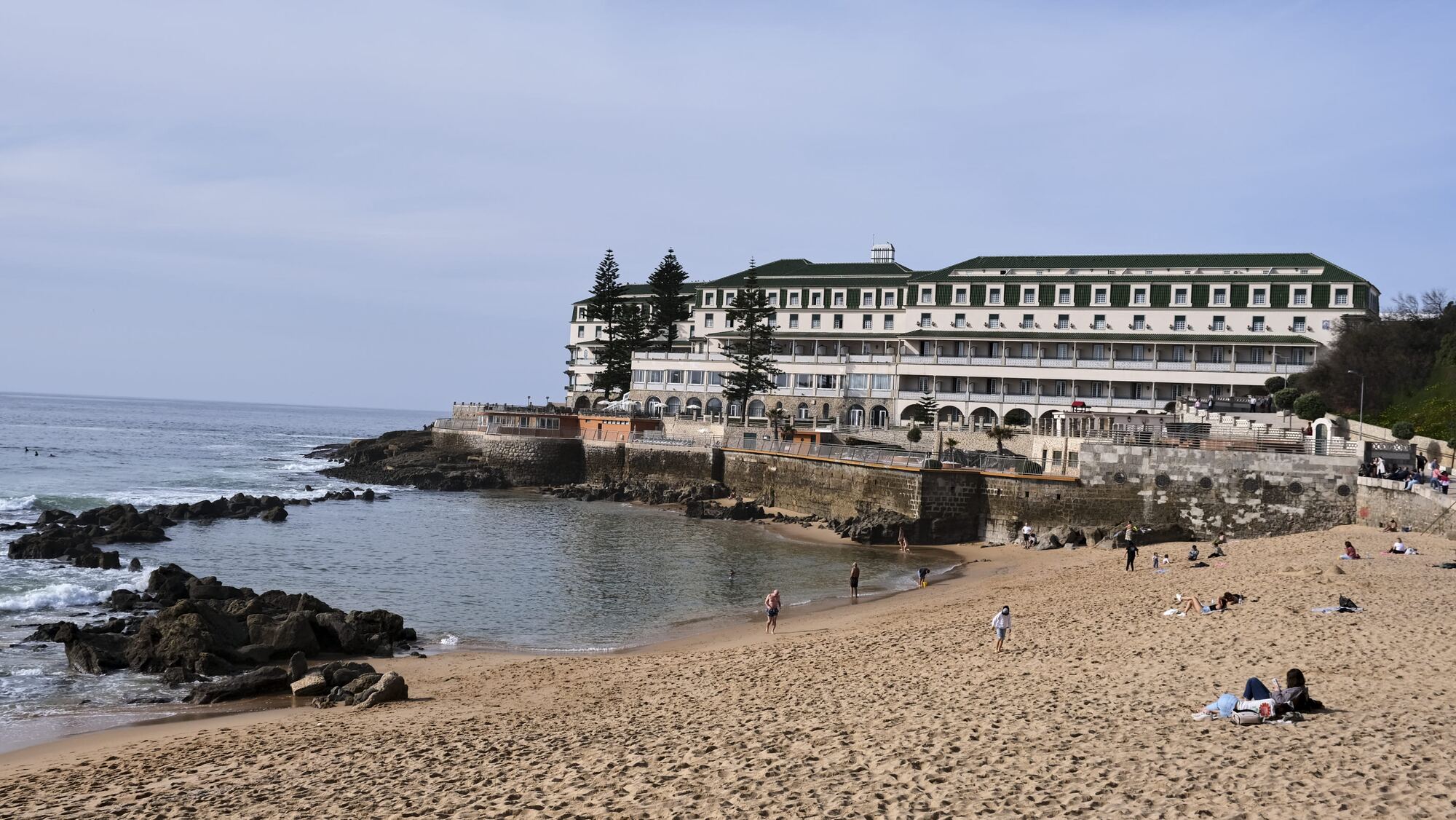
- Praia dos Pescadores: the harbour beach under the old town, the most sheltered, where the town swims.
- Ribeira d'Ilhas: the reserve's main beach north of town, a right-hand point wave, a bar and a car park; the competitions run here.
- Coxos: a rocky cove past Ribeira d'Ilhas with the coast's best wave, for experts, and no sand at high tide.
- São Lourenço: the long beach and chapel at the north end, a big-wave right in winter and a walk in summer.
Surfing
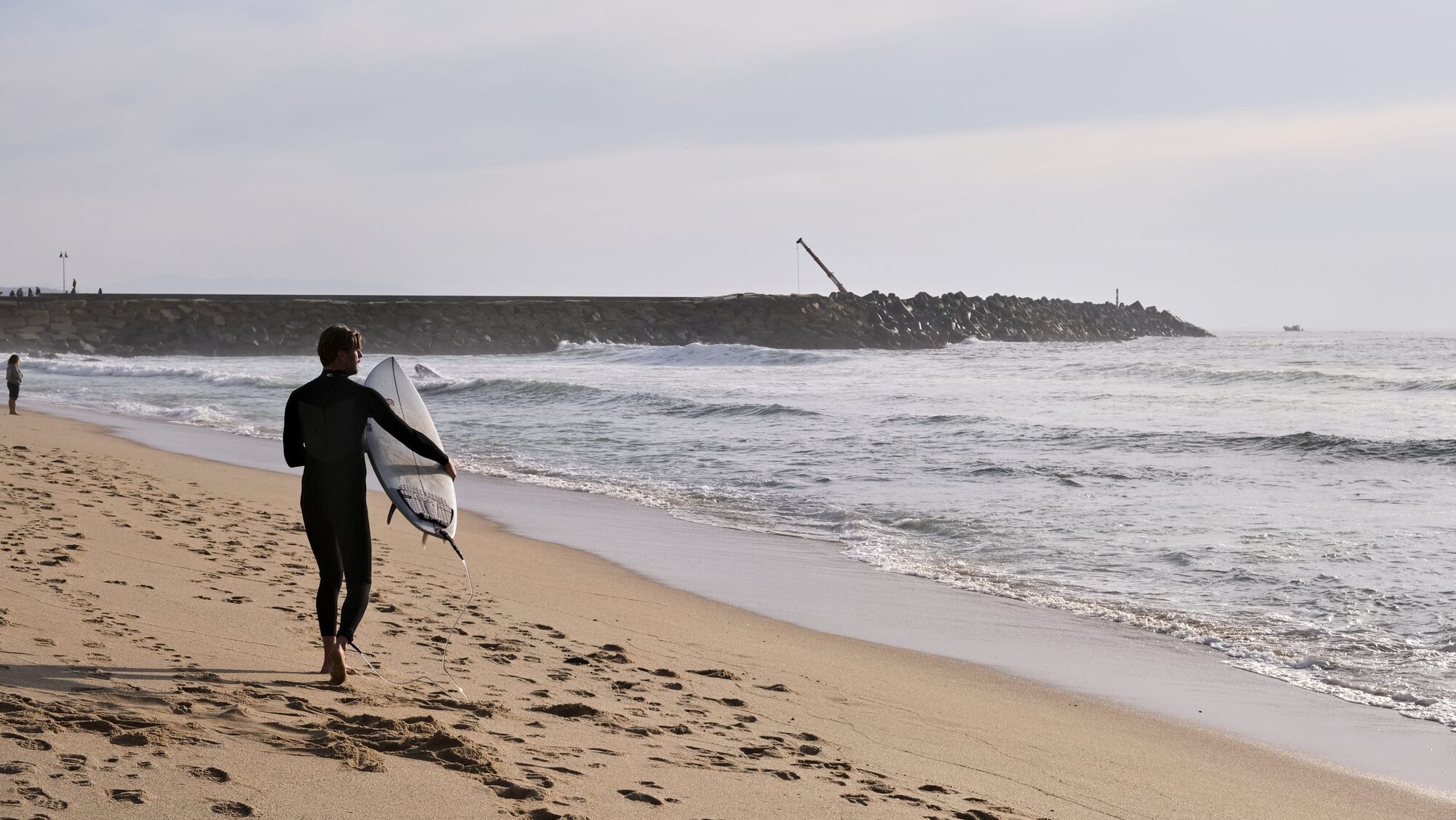
This is what the reserve protects: eleven kilometres of coast with fifteen named waves, beach breaks in the south for learning, points and reefs in the north for everything after, all facing the Atlantic swell that runs from September to April. Autumn has the best of it, with swell, light wind and warm air; winter has the size; summer is small and windy after lunch, which is why the schools work the beach breaks in the morning. As a rule the beach breaks like low to mid tide and the points and reefs mid to high, but the swell direction and the wind decide the day. Read it before you drive: MEO's live beach cameras cover the whole coast from São Lourenço to Foz do Lizandro, any surf forecast gives the swell and the wind, and the tide table settles the rest. The waves, south to north, and then the schools:
- São Julião: an open beach break, all levels on a small day, low to mid tide, the least crowded of the beginner beaches.
- Foz do Lizandro: the beach break at the river mouth where every school starts beginners, low to mid tide, busy with lessons from June to September.
- Lage dos Tubos: the slab between Foz do Lizandro and the town, a fast hollow wave over rock, advanced only.
- Praia do Sul: the town beach, a soft beach break for beginners on small swells, mid to high tide, a walk from the centre.
- Praia dos Pescadores: the harbour beach, sheltered by the breakwater, which only works when everything else is too big; the beginners' refuge on a winter swell.
- Praia do Norte and Matadouro: the two beaches just north of the harbour, a beach break for intermediates and a forgiving reef for all levels, both a walk from the centre.
- Pedra Branca and Reef: two reefs side by side just north of town, a powerful left and a hollow right, mid to high tide, for confident surfers only.
- Ribeira d'Ilhas: the long right-hand point over rock, the reserve's main wave and the competition venue, rideable from intermediate up, works on most tides and best mid to high; crowded when it is good.
- Cave: a heavy right over shallow rock north of Ribeira d'Ilhas, experts only, mid tide.
- Crazy Left: the long left across the cove from Coxos, advanced, mid to high tide.
- Coxos: the right-hand point in the cove, the coast's best wave, experts only, mid to high tide, with a local crowd that expects manners.
- São Lourenço: the long beach at the north end, intermediate and above most of the year, a big-wave right on the winter swells when it is experts only.
- Calada: the last beach before the coast turns, north of São Lourenço, intermediate and above, and the emptiest of the lot.
- NaOnda Surf School: the oldest school in town, on the beach break at Foz do Lizandro, all year.
- Ericeira Surf School: at Ribeira d'Ilhas, with certified instructors, children's lessons and camps.
- 3Surfers: a locally founded school that picks the beach by the day's conditions, board hire too.
Kitesurfing
Kitesurfing here runs on the nortada, the north wind that gets up most summer afternoons from May to September and blows side-shore to cross-offshore along this coast. It is a wave-riding coast, not a flat-water one, and the wind is stronger and steadier the further south you go, which is why the region's kitesurfers gather at Guincho and most people here drive rather than wait. Check the wind on Windfinder or Windguru before you load the car; the station pages for the town and for Guincho are the ones to watch. The beaches, nearest first:
- Foz do Lizandro: the local launch, from the wide sand at the river mouth on a nortada afternoon, with a beach break to ride; shared with the surf schools in summer.
- Guincho: 35 minutes south near Cascais, the coast's kitesurfing beach, with a strong side-shore wind, waves, dunes and a car park full of vans; the most reliable session within reach.
- Lagoa de Óbidos: an hour north at Foz do Arelho, the other flat-water lagoon, wide and shallow with the same nortada, and two good schools on its south shore, Kite Control with its shop and lessons from first flight to foil, and the smaller Kitesurf Soul for private lessons and hire.
- Lagoa de Albufeira: an hour and a quarter south across the Tagus, the other flat-water lagoon, where the Lisbon side learns and everyone goes when the sea is too big.
Yoga
Yoga is the town's second sport, run by and for the surfers: morning classes before the wind and evening ones after the session, hatha and vinyasa mostly, yin for the tired, taught in English by teachers who come and go with the seasons. Every surf house runs its own classes for guests; the studios below take anyone, and a drop-in costs about €10 to €20. Try two or three before you commit to a pass, and know that the summer timetables shrink from October.
- Ericeira Yoga Studio: the big one, on Rua de São Félix, forty classes a week from a dozen teachers, open all year including holidays.
- Sandhi House: the studio above the sea at Santa Marta, by the class or in tens, and a monthly pass.
- Surf Yoga Ericeira: a small studio at Colinas do Atlântico, hatha, vinyasa and yin, six classes a week, booked by WhatsApp.
Hiking
The cliffs are the walking: a path runs the whole coast from São Julião in the south to São Lourenço in the north, mostly on the cliff top, sometimes down to a beach and up again, and you can walk any stretch of it and come back the same way or along the road. Mornings before the wind, and in summer a hat, since there is no shade. South to north:
- São Julião to Foz do Lizandro: the quiet stretch, along the cliffs above the long empty beach, about an hour, with a swim at either end.
- Foz do Lizandro to the town: the south path, along the cliffs past Praia do Sul into the old town, about an hour, and the one to do first.
- The town to São Lourenço: the north path, past São Sebastião and Ribeira d'Ilhas, up to the fort above Milregos and on to the chapel on the point, about two and a half hours one way.
- São Julião to São Lourenço: the whole coast in one go, about five hours, with a lunch at Ribeira d'Ilhas and a taxi or a second car at the end.
- The Tapada de Mafra: the walled royal hunting park behind the palace, marked loops of one to three hours through cork oak, with deer and wild boar, twenty minutes inland.
- Sintra's hills: half an hour south, the paths between the palaces under the trees, cooler and greener than anything on the coast.
In town
Off the water: the harbour at dusk when the boats come in, the market in the morning, padel and a gym in town, cycling along the coast road, and the municipal pool for the days the sea says no. The town holds a festival most summer weekends, and the surf competitions at Ribeira d'Ilhas bring a crowd in autumn that is worth seeing once even if you do not surf.
Visiting
36 hours in Ericeira
In the manner of the New York Times column: arrive Friday afternoon, leave Sunday, and use the weekend to test the town before you decide. Every stop is chosen to answer a question a future resident has, not a visitor.
Come in the shoulder months if you can: May, or late September to October, when the wind has dropped and the residents are back on the terraces.
Friday
- 5 pm Explore the old town. Start in Praça da República and lose yourself in the white streets with blue trim: the fishermen's chapel, the surf shops, the bakeries, the miradouro above the harbour where the boats come in. Down to Praia dos Pescadores and up again. It is the whole walkable centre in an hour, and by the end you know whether the scale suits you.
- 8 pm Costa Fria. Seafood on the promontory facing the waves, with a Greek chef and owner: the clams in coconut and lime, the seafood rice, plates to share. Open every day, and worth booking on a summer Friday.
- 10.30 pm Adega Bar 1987. A small bar with petiscos and, most weekends, a band. This is what a winter night out looks like here, so judge it now.
Saturday
- 8.30 am Vizinha. Coffee and pastry at the café and organic grocer on the square in Santo Isidoro, ten minutes north, where the village side of the coast starts its Saturday.
- 10 am Surf at São Julião. The open beach break at the south end of the coast, the emptiest of the beginner beaches, and a school will meet you there if you book the day before. Two hours in a wetsuit tells you more about the water temperature than any guide.
- 1 pm Voyage Bar. Stone-fired pizza on the beach you have just surfed, with a big terrace and the after-surf crowd; no need to move the car. For the local alternative, Marisqueira Aquários in Magoito village, five minutes south, is a cash-only fish house with paper tablecloths and a €10 to €15 plate.
- 2.30 pm A nap on the sand. Back down to the beach for the slow part of the afternoon: a towel, a swim if the sea allows, the surfers going in for the evening session, and nobody within fifty metres. This is what a Saturday here is for, and the wind will tell you whether it is for you.
- 4.30 pm Over the cliffs to Foz do Lizandro. When the sand has done its work, walk the cliff path north, an hour along the long empty beach to Foz do Lizandro, and take a taxi or an Uber back to the car, fifteen minutes. It is the quiet side of the coast, and the side to know if you want space.
- 6.30 pm Sunset at Furnas. A drink on the cliff edge, then stay for grilled fish if you want the plainer, older way with it.
- 11 pm Ouriço. The club since 1960, open Thursday to Saturday. Optional, and mostly for deciding whether you will ever go again.
Sunday
- 10 am Balagan. Brunch on the rooftop over Praia do Sul, and the town's Sunday morning passing on the promenade below: families, dogs, surfers with boards under their arms, the older residents on their walk.
- 1 pm Ribamariscos. The roadside marisqueira on the coast road at Ribamar, ten minutes north: a shellfish platter or the caldeirada at village prices, and a last look at the sea before the road turns inland.
- 3.30 pm Quinta de Sant'Ana. Drive inland through Mafra to the family wine estate at Gradil, half an hour from the coast. The tasting is an hour and a half with five wines, a walk through the vines, the cellar and the chapel, and cheese and olives, €45 a head for two or more; the times are not fixed, so write or call the estate a few days ahead to set one.
Explore the surroundings
Ericeira sits at the middle of a coast worth a year of Sundays. Everything below is within an hour and a quarter by car, and the first three are the ones residents actually repeat.
- Mafra: twenty minutes inland, the baroque palace, basilica and library, and the walled tapada with its deer and trails.
- Sintra: half an hour south, the palaces in the wooded hills, Cabo da Roca at the continent's western tip, and the Sintra coast at Azenhas do Mar and Praia das Maçãs.
- Cascais and Guincho: 45 minutes, the town for a warm swim and a marina, the beach for kitesurfing and the dunes.
- Lisbon: an hour, for a museum, a concert, a late dinner and the airport.
- Peniche and Baleal: an hour north, Supertubos and the Baleal beach breaks, the fort, and the boat to the Berlengas in summer.
- Óbidos: an hour and a quarter north, the walled town, the castle and the lagoon.
Hotel recommendations
The town has surf hostels and guesthouses at every price. Two hotels stand out, one in a valley at Santo Isidoro and one on the cliffs at Encarnação, both around €200 a night out of season and well above it in summer.
- Immerso: 37 rooms in a valley at Santo Isidoro, a spa, a heated pool and a restaurant, ten minutes from town.
- Aethos Ericeira: 50 rooms on the cliffs at Encarnação, 8 km north, a saltwater pool and a spa.
Sources
Sold pricesexactmunicipalINE, Estatísticas de preços da habitação ao nível local, indicator 0012234: the median deed price per square metre of every home sold in the trailing twelve months, by municipality and parish, refreshed from INE's API each quarter. Deed prices, not asking prices.
IMI, tourist tax and containmentexactmunicipalIMI: Mafra council, 0,43% on urban property for 2026 (economiafinancas.com list), one of the higher rates around Lisbon. Tourist tax €1 per person per night, up to 7 nights (2026 municipal guides). No containment areas.
Figures calibrated 2026-08.